For breast cancer screening Canada programs offer mammography to people without symptoms so that cancer can be found early. This page is general information only, and your own care team decides what screening is appropriate for you.
It sits within the overview of breast reconstruction in Canada, because screening and early detection shape the treatment decisions that follow. It is general information only, and the reader’s own care team decides what screening is appropriate for them.
| Item | What the Canadian Cancer Society says |
|---|---|
| Ages 40 to 74 | Have a mammogram every 2 years. |
| Reliability | Mammography is the most reliable method of finding breast cancer. |
| Knowing your breasts | Know what is normal for your breasts and report any changes. |
| Early treatment | Chances of successful treatment are better when cancer is found and treated early. |
| Purpose of screening | Screening tests help find breast cancer before symptoms develop. |
Sources: Canadian Cancer Society: when to be screened and Canadian Cancer Society: breast screening. This information can change, so please check the source for the latest guidance.
Why early detection matters
The Canadian Cancer Society explains that screening means checking for a disease in a group of people who do not show any symptoms of the disease, and that screening tests help find breast cancer before any symptoms develop. The Society adds that when breast cancer is found and treated early, the chances of successful treatment are better. Provincial and territorial screening programs use screening mammography, an x-ray of the breast that produces an image called a mammogram.
Symptoms are often absent early on. The Society’s page on symptoms says that breast cancer may not cause any signs or symptoms in its early stages, which is why screening exists. The numbers show how common the disease is. The Society estimates that 32,400 women in Canada will be diagnosed with breast cancer in 2026, and the page on breast cancer statistics Canada looks at trends and mortality in more depth.
The Society’s statistics page also explains that the increase until the early 1990s occurred partly because mammography was used more often, which meant that more cases of breast cancer were found. It adds that the reduction in the death rate likely reflects the impact of screening and improvements in treatment for breast cancer.
What the Canadian Cancer Society says about ages and timing
The Canadian Cancer Society’s guidance is that people aged 40 to 74 have a mammogram every 2 years, and people aged 75 or older talk to their healthcare provider about whether having a mammogram is right for them. It describes mammography as the most reliable method of finding breast cancer, and says people should know what is normal for their breasts and tell a healthcare provider about any changes, whatever their age.
The same page notes that not every province or territory offers mammograms through an organized program or by self-referral for people in their 40s, and the Society says it is advocating for fair and timely access to screening no matter where people live. Rules therefore differ by region, and a person who wants to know what applies where they live can ask their provincial program or care team.
The Society frames the choice as personal. It says people should be aware of the benefits and limitations of screening mammography based on their age and risks, and it advises talking with a healthcare provider to help decide if screening mammography is right for them. Its guidance is general, and a healthcare provider may also do a clinical breast examination to check for signs of cancer.
Benefits and limitations of mammography
The Society sets out both sides. It states that no screening test is 100% accurate, but that the scientific evidence shows having regular mammograms lowers the risk of dying from breast cancer. Among the benefits it lists are reassurance when a result is normal, and early detection that may mean less treatment and less time spent recovering.
The limitations are listed as well. A mammogram may suggest breast cancer even though cancer is not present, which is called a false positive, and the Society says this is more likely at a younger age. A mammogram may also miss a cancer that is present, called a false negative. Mammograms are x-ray tests that expose the breasts to radiation, and the Society says the amount in each test is very low but adds up over time.
The Society concludes that it believes the benefits of regular mammograms outweigh the limitations, and it also stresses that it is each person’s decision. Understanding both sides is part of making an informed choice.
How screening programs work across Canada
Programs differ in how they reach people. According to the Society, many provinces and territories send an invitation from ages 50 to 74, and most programs across Canada allow self-referral for a mammogram starting at age 40. Some programs have lowered their start age to 45 or 40. A healthcare provider can also refer a person to a program and can help explain eligibility.
The same page says that most provinces and territories have organized breast screening programs, and that Nunavut does not have an organized breast screening program right now, so people there are directed to talk to their healthcare provider about how they can be screened.
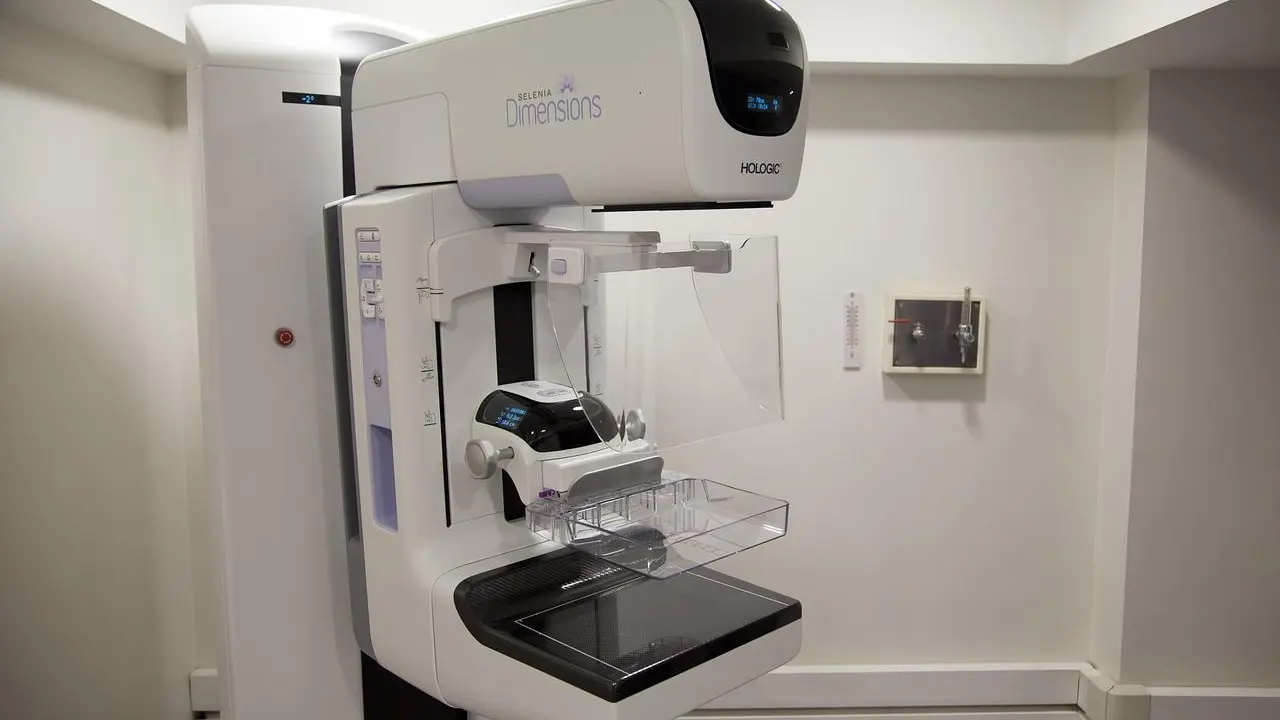
At an appointment, a radiology technologist positions the breast on a special x-ray machine. The Society explains that the breast is placed between 2 plastic plates that are pressed together to flatten it, which may be uncomfortable but lasts only a few seconds. There are 2 kinds of mammograms: a screening mammogram, done when there are no signs of breast cancer, and a diagnostic mammogram, which helps make a diagnosis when there are signs.
Higher risk and personal screening plans
People at higher risk may be screened differently. The Society lists factors that may place someone at higher risk, including a strong family history of breast cancer, certain gene mutations such as BRCA1 or BRCA2, a personal history of conditions like lobular carcinoma in situ, ductal carcinoma in situ or atypical hyperplasia, radiation therapy to the breast or chest, and dense breast tissue. It says that people at higher than average risk may need a personal plan for screening that could include mammography at a younger age, more frequent mammography, or ultrasound or magnetic resonance imaging.
Criteria for high risk vary by province and territory. The Society’s page on risk factors notes that people with dense breasts have a higher risk of developing breast cancer. Whether a particular factor applies is a question for a healthcare provider, who can explain which program and starting age fit a person’s situation.
After a screening result
A call-back is not the same as a diagnosis. The Society says that after a mammogram a person may be called back for further testing, and that it is normal to be worried, and that in most cases further testing confirms there is no breast cancer. Further tests often include a diagnostic mammogram, an ultrasound that is offered about half the time, and sometimes a biopsy.
The Society’s diagnosis page explains that a biopsy is the only definite way to diagnose breast cancer. When treatment includes surgery, the reconstruction options described elsewhere on this site may come into the conversation, along with questions about implants. The page on breast implant safety Canada covers what the regulator says about devices.
Screening continues in a specific way after reconstruction. The Canadian Cancer Society says that people who have reconstruction using implants or tissue from other parts of the body do not need regular mammography on the reconstructed breast, but they will need it on the natural breast.
Frequently asked questions
Does every province run a breast screening program?
Show answer
The Canadian Cancer Society says most provinces and territories have organized programs, and Nunavut does not have one right now.
Can a person self-refer for a mammogram?
Show answer
Most programs across Canada allow self-referral starting at age 40, according to the Canadian Cancer Society, and a healthcare provider can also make a referral.
What does a call-back mean?
Show answer
It means further testing is needed. The Society says that in most cases further testing confirms there is no breast cancer.
Is screening different for people at higher risk?
Show answer
The Society says people at higher than average risk may need a personal plan, which may start earlier or be more frequent.