DIEP flap reconstruction rebuilds a breast using skin, fat and blood vessels from your lower belly, and no abdominal muscles are cut or removed.
This page is general information only, and decisions about surgery and recovery belong with your own surgeon and care team.
DIEP flap reconstruction is a type of breast reconstruction that uses skin, fat and blood vessels from the lower abdomen to rebuild a breast, without taking abdominal muscle.
| Item | What to know |
|---|---|
| Operating time | Typically takes anywhere from six to eight hours |
| Hospital stay | You stay in hospital for two to five days |
| Recovery time | Can take six to eight weeks |
| Numbness | May take up to a year to go away |
| Success rates | Between 96% and 99% |
| Scar | A horizontal scar along the bikini line |
These figures come from Cleveland Clinic and the Canadian Breast Cancer Network; information can change, so please check the sources for the latest details.
What DIEP flap reconstruction is
DIEP stands for deep inferior epigastric perforator, the name of a blood vessel in the lower belly. According to Cleveland Clinic, a surgeon uses blood vessels, fat and skin from the lower belly to rebuild the breast, and no abdominal muscles are cut or removed. The Canadian Cancer Society glossary describes it in similar terms: skin, tissue and blood vessels are taken from the lower abdomen, around the belly button, and muscle tissue is not used.
It belongs to the family of flap, or autologous, procedures. The Canadian Breast Cancer Network explains that flap reconstruction uses tissue from another part of the body, such as the belly, back, buttocks or thighs, to rebuild the breast, rather than an implant. The same page calls the DIEP flap one of the most common and modern types of flap surgery.
Because the tissue is fully detached from the abdomen, it needs a new blood supply at the chest. A plastic surgeon with specialized training in microvascular tissue transfer performs the operation, as Cleveland Clinic notes, reattaching the vessels from the flap to vessels in the chest.
How the operation is done
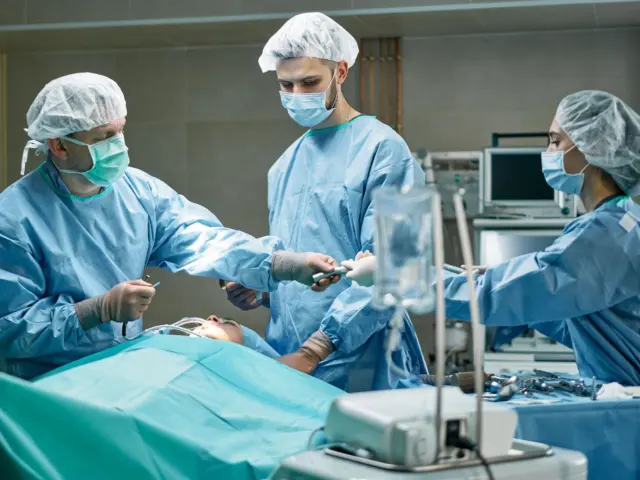
A description from Cleveland Clinic outlines the main steps. The surgeon makes a long incision across the lower belly, from hip bone to hip bone, between the belly button and the start of the pubic hair. A single flap of skin containing fat and blood vessels is lifted from the abdomen without removing any muscle. The flap is then moved to the breast site, usually through the same incision line used for the mastectomy or lumpectomy, and its blood vessels are carefully attached to vessels in the chest.
Once the blood supply is connected, the surgeon shapes the tissue to resemble the natural shape of a breast. Drains are usually placed in the incisions on the belly and chest to help remove fluid, and the belly skin is positioned so that the navel stays in a natural position.
The reconnection of tiny vessels is the delicate part. A peer-reviewed review in PubMed Central notes that final preparation of the recipient vessels is best performed under a microscope, and that the flap’s robust blood supply reduces the risk of fat necrosis and allows aggressive shaping of the flap.
The operation is long. Cleveland Clinic states that DIEP flap surgery typically takes anywhere from six to eight hours, and that people usually stay in hospital for two to five days afterwards.
Who may be considered for it
DIEP flap surgery can be done at the same time as breast cancer surgery (immediate reconstruction) or afterwards (delayed reconstruction), and it can follow either a mastectomy or a lumpectomy. The Canadian Breast Cancer Network also describes both immediate and delayed timing for flap procedures in general.
Not everyone is a candidate. Cleveland Clinic lists several situations where the operation may not be possible:
- A DIEP or TRAM flap was already used to rebuild the other breast, because the tissue can only be taken from the belly once.
- There is not enough extra fat and tissue in the abdomen, for example in very thin people or after a tummy tuck or liposuction.
- The blood vessels in the belly are too small or not in the right place.
- Previous abdominal surgery, such as abdominal wall reconstruction or a colostomy, rules it out. Most people can still have the operation after procedures such as a C-section, open hysterectomy or tubal ligation.
The Canadian Breast Cancer Network adds that the DIEP flap is not possible after a tummy tuck and may not be possible after major abdominal surgery. When the abdomen is not suitable, that source notes that other flap sites, such as the upper buttock, may be used instead.
Benefits and risks reported
Patient-information sources describe several reasons people consider the DIEP flap. Cleveland Clinic lists a more natural look and feel, preservation of abdominal strength because no muscle is cut, permanent results, and the possibility of keeping some sensation in the reconstructed breast. The Canadian Breast Cancer Network points out that the breast may change along with the body over time and that the approach avoids implant-specific risks such as rupture or capsular contracture.
There are trade-offs. The Canadian Breast Cancer Network describes flap surgery as usually a longer and more complex operation, with recovery involving both the chest and the donor site. It also leaves a horizontal scar along the bikini line. Cleveland Clinic lists possible complications that include hernia, firm lumps of scar tissue, and necrosis, where some tissue dies because the flap does not get enough blood; it adds that rarely the entire flap is affected and needs to be removed.
| Feature | DIEP flap | Implant reconstruction |
|---|---|---|
| Material used | Own skin, fat and blood vessels from the lower belly | Saline or silicone implant |
| Abdominal muscle | Not cut or removed | Not taken from the belly |
| Surgery and recovery | More involved, longer recovery | Less involved, shorter recovery |
| Look and feel | More natural-looking results | Implant may rupture, harden or shift |
Cleveland Clinic summarizes that DIEP reconstruction is more involved and requires a longer recovery than implant reconstruction, but offers more natural-looking results. Readers who want the implant side of the comparison can see the page on implant-based breast reconstruction.
DIEP compared with TRAM flaps
The DIEP flap grew out of an earlier abdominal flap, the TRAM (transverse rectus abdominis myocutaneous) flap. The PubMed Central review explains that if the perforating vessels alone are harvested, sparing the entire rectus abdominis muscle, the resulting flap is called a DIEP flap. It adds that sparing the entire muscle potentially reduces donor-site problems such as abdominal bulge and weakness, although whether DIEP flaps reduce these complications significantly more than free muscle-sparing TRAM flaps has not been clearly shown.
Memorial Sloan Kettering describes its approach as sacrificing the least amount of abdominal muscle possible, and in most cases no muscle at all, using either the free muscle-sparing TRAM flap or the free DIEP flap. Both rely on microvascular techniques. For the pedicled and free versions of the older approach, see the page on TRAM flap reconstruction.
Recovery and outlook
Cleveland Clinic states that recovery after DIEP flap surgery can take six to eight weeks. A compression garment may be worn for several weeks, and strenuous activity, heavy lifting and overhead movements are avoided at first. By the second week, light exercise or arm movements may be allowed, depending on the surgeon’s advice.
Typical effects described by the same source include numbness in the reconstructed breast and belly, which may take up to a year to go away; soreness around the abdomen and chest that should ease after about two weeks; swelling for a few weeks; and tightness in the skin of the belly and breast. Warning signs such as bleeding, fever, severe pain, shortness of breath or signs of infection at the incisions are reasons to contact the care team.
On outcomes, Cleveland Clinic reports success rates for the operation of between 96% and 99%, and says that people with risk factors such as diabetes, high blood pressure and high cholesterol may have success rates on the lower end of this range. The same US source says that in 2017 DIEP flap surgery accounted for about 10% of all breast reconstructions.
Frequently asked questions
Does DIEP flap reconstruction take muscle from the abdomen?
Show answer
No. Both Cleveland Clinic and the Canadian Cancer Society describe it as a procedure that does not use abdominal muscle. The Canadian Breast Cancer Network notes that the blood vessels are followed through the muscle without removing it.
How long does the surgery take?
Show answer
It is a long operation that usually calls for a hospital stay afterwards. The earlier section on how the operation is done gives the typical operating time and stay reported by Cleveland Clinic.
Can the operation be done after a lumpectomy or at a later date?
Show answer
Yes. Cleveland Clinic explains that it can follow a mastectomy or a lumpectomy, and it can happen at the same time as cancer surgery or later as delayed reconstruction.
Who decides whether it is suitable?
Show answer
The person’s own plastic surgeon and care team, after assessing factors such as available abdominal tissue, blood vessels and previous surgery.